
One Piece vs Two Piece Ostomy Pouches: Which Is Right for You?

Deciding between a one-piece and a two-piece ostomy pouch is one of the earliest and most personal choices an ostomate makes. The right system can mean fewer leaks, happier skin, and a daily routine that feels almost automatic. The wrong one can create friction in ways that go far beyond adhesive. This ostomy pouch comparison walks through the practical differences, the pros and cons, and the everyday scenarios that make one style feel like a natural fit and the other like a constant adjustment.
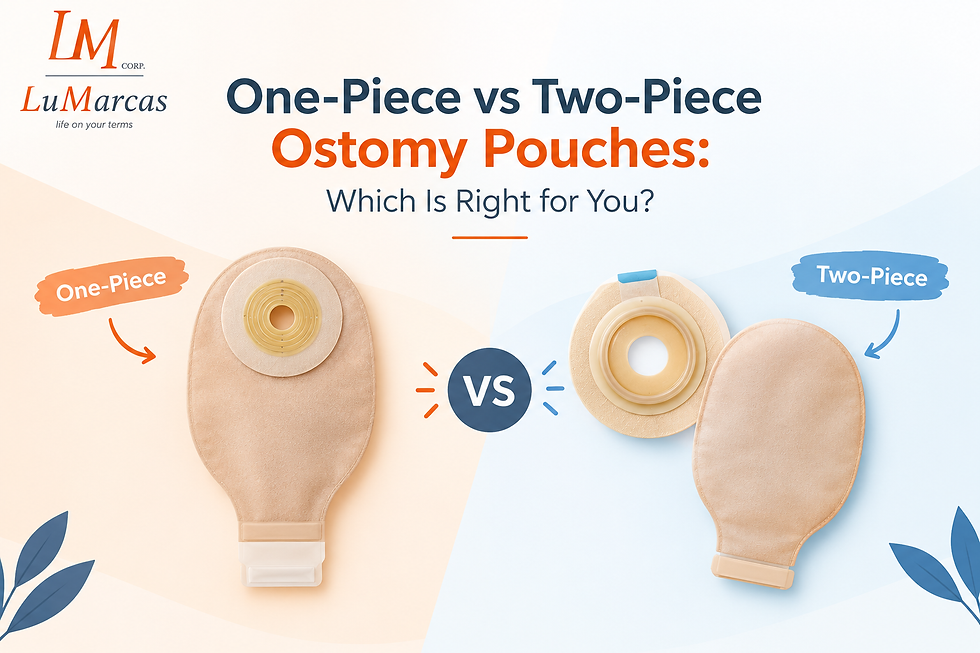
Both ostomy pouch systems have the same core job. A barrier adheres to the skin around the stoma, and a pouch collects output. How the barrier and the pouch connect determines everything else: how the system feels under clothing, how often skin gets exposed to adhesive removal, and how many steps are involved in a change. Getting the match right makes a genuine difference.
What Actually Sets the Two Systems Apart?
In a one-piece system the skin barrier and the pouch are permanently bonded into a single unit. When the pouch is changed, the barrier comes off with it. There is no separate ring, flange, or clicking mechanism. The entire product is applied in one motion and removed the same way.
A two-piece system separates the barrier from the pouch. The barrier stays on the skin for multiple days. The pouch attaches to it through a mechanical or adhesive coupling, often a plastic flange or a press-on ring. This design allows the pouch to be removed and replaced without disturbing the barrier at all.
Understanding that foundational difference clears up a lot of the confusion that surrounds the one piece vs two piece ostomy pouch debate. All the other talking points about bulkiness, convenience, and skin health flow directly from that single design choice.
Where One-Piece Systems Shine?
A one-piece pouch offers a streamlined experience that many people come to rely on. Without a rigid connection point, the whole system sits very close to the body. The pouch moves with the skin rather than pivoting on a plastic ring. This low-profile feel becomes especially important under snug clothing, swimwear, and activewear. The lack of a flange means there is nothing hard pressing into the abdomen when bending forward or sitting for long periods.
Simplicity makes a one-piece system friendlier for anyone who wants the fewest possible steps during a change. There is no lining up of parts, no checking that a seal has clicked completely, and no separate storage of pouches and barriers. The whole task reduces to clean, dry, peel, and apply. For new ostomates still building confidence, this can lower the mental load significantly.
Skin that reacts quickly to adhesives sometimes does better with a one-piece simply because the barrier is replaced at every pouch change. There is no temptation to push a barrier past its comfortable wear time. The regular reset can keep irritation from building up in ways that are harder to notice when a barrier stays on for three or four days.
Why Two-Piece Systems Keep a Loyal Following?
Flexibility is the reason most people stick with a two-piece setup. Being able to remove the pouch while leaving the barrier in place creates a level of control that a one-piece cannot match. A person can switch from a smaller daytime pouch to a larger overnight pouch without ever pulling adhesive off the skin. Morning routines become faster when only the pouch gets swapped. The barrier can stay secure for several days, which reduces the frequency of full changes.
Two-piece ostomy pouch systems also allow the pouch to be rotated. This means the pouch can be positioned horizontally, diagonally, or at any angle that suits body shape, stoma placement, and clothing choices. A small shift in angle can relieve pressure during driving, office work, or sleep. That adjustability is built into the coupling design and simply does not exist in a fixed one-piece product.
Skin health checks are another area where two-piece systems stand out. The pouch can be unclipped for a quick visual check of the stoma and peristomal skin, then reattached. For anyone whose stoma changes size throughout the day or who needs to monitor output closely, this quick access is a meaningful advantage.
Breaking Down the Main Sticking Points
A practical ostomy pouch comparison has to examine the small daily moments that shape a person’s experience with a product. These are the details that rarely appear in a product brochure.
Application and Change Time
A one-piece change is a single straightforward process. Clean the skin, prepare the barrier, apply. The pouch is already attached. A two-piece change adds a few extra motions. The barrier is applied separately, and then the pouch must be aligned and pressed into place until the coupling is secure.
For hands that struggle with fine movements, these extra steps can become a barrier. For everyone else, the learning curve is short and the motions become habit after a handful of changes.
Discretion Under Clothing
One-piece systems tend to win on pure flatness. No rigid ring means the pouch drapes and moves like fabric. Two-piece flanges have become slimmer over the years, but there is still a subtle structural edge where the coupling sits. The difference is most noticeable under thin, clingy materials. People who wear looser clothing or structured fabrics often find the difference negligible.
Skin Health and Observation
Skin that stays calm with infrequent adhesive changes might thrive with a two-piece system. The barrier can remain in place for multiple days, sparing the skin from repeated pulling and cleaning. But if peristomal skin needs frequent inspection, the two-piece earns its place by allowing fast, disruption-free checks. One-piece users cannot peek at the stoma without removing the entire system, so they rely on feeling and output patterns to monitor skin condition.
Active Living
Both ostomy pouch systems can handle movement, water, and sweat well when the fit is right. The seamless design of a one-piece appeals to swimmers, runners, and anyone who wants nothing that could separate during intense motion. Meanwhile, the two-piece offers a different kind of convenience for activities like hiking or camping. A spare pouch takes up little room in a bag, and the barrier stays firmly on the body, making trailside changes simple and quick.
Cost Considerations
Price patterns vary by personal usage, insurance coverage, and wear time. One-piece users change the entire product at every swap, which can mean going through more barriers in a month. Two-piece users often replace barriers less often but purchase pouches and flanges as separate items. Some people end up spending roughly the same, while others find a clear cost difference. The only way to know is to track real usage over a few weeks rather than relying on estimated averages.
Why There Is No Universal Winner
Any ostomy pouch comparison that declares one style superior misses the point entirely. This is not a debate about engineering. It is a conversation about skin, routines, confidence, and comfort. One person’s streamlined daily driver is another person’s constant irritation. Some ostomates keep both styles on hand and choose based on the day’s plan. Others land on a clear preference and never look back.
The one piece vs two piece ostomy pouch decision ultimately comes down to which system lets the person wearing it move through life with less thought and more ease. A product that fades into the background during a long workday, a family dinner, or a quiet walk is the one that deserves a place in the supply closet.
Lumar Care carries a full selection of ostomy pouch systems from brands ostomates trust. Both one piece and two piece options are available with a range of barrier shapes, closure types, and drainage styles to match different needs. Finding the right fit starts with knowing what feels right on the body, not just on paper.
Ready to make a change? Shop Ostomy Pouches at Lumarcas and discover a system that supports the way real life actually feels.
Frequently Asked Questions
What is the main difference between a one-piece and a two-piece ostomy pouch?
The main difference lies in how the skin barrier and the pouch are connected. A one-piece system bonds them together permanently, so the whole unit is applied and removed at once. A two-piece system uses a flange or adhesive coupling that allows the pouch to detach from the barrier, leaving the barrier in place on the skin during a pouch change.
Can I switch between one-piece and two-piece systems?
Yes, many ostomates switch between the two styles depending on the day’s activities or even the season. No medical rule prevents alternating. Sampling both systems is actually one of the best ways to understand which feels more comfortable under different circumstances.
Which system is better for sensitive skin?
It depends on how the skin reacts. If frequent adhesive removal causes irritation, a two-piece can help by leaving the barrier in place for several days, reducing the number of times the skin is pulled. If the skin does better with a completely fresh barrier and more frequent air exposure, a one-piece often provides that regular reset.
Are two-piece pouches more noticeable under clothing?
The flange on a two-piece system adds a small amount of structure that can be slightly more noticeable under very thin or clingy fabrics. For most everyday clothing and fabrics with a little drape, the difference is barely perceptible. Modern low-profile couplings have reduced the bulk considerably.
How often should I change a one-piece versus a two-piece system?
Wear time depends on output, skin condition, and product durability rather than a fixed schedule. One-piece systems are typically changed every one to three days because the barrier and pouch come off together. Two-piece barriers can often stay in place for three to five days, with the pouch being changed more frequently as needed. Always follow the guidance of a stoma care nurse and watch for signs of leakage or skin breakdown.


Comments